


Flatbed vs. Lowboy Traile
A deep-dive comparison between Flatbed and Lowboy (Lowbed) semi-trailers, focusing on load capacity, legal height restrictions, and the safest loading methods for heavy machinery and oversized cargo.
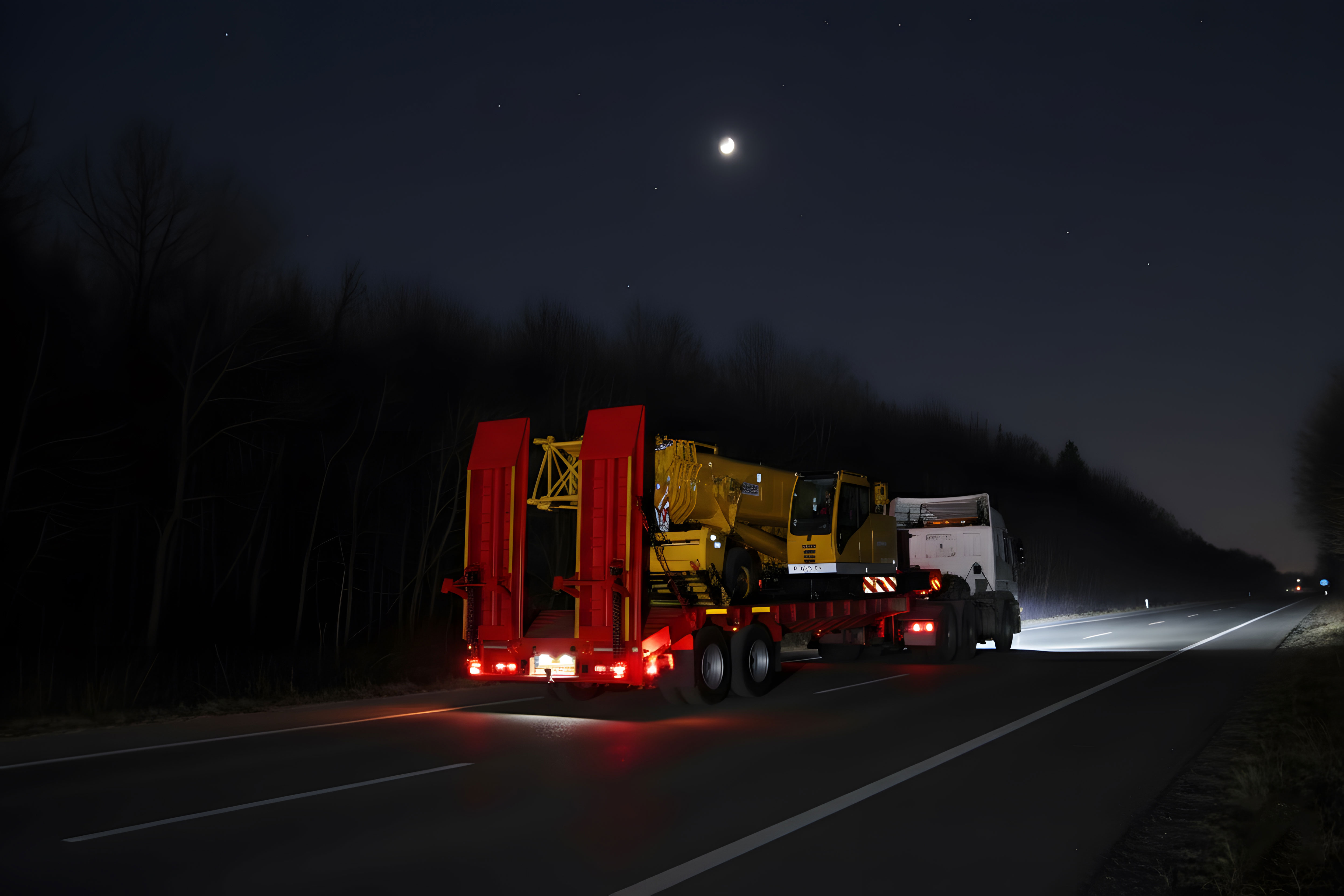
Flatbed vs. Lowboy Trailer: Choosing the Right Haulage Solution for Heavy Equipment
Choosing the correct trailer for heavy equipment transportation is crucial for ensuring safety, legal compliance, and cost-efficiency. When moving large machinery—from bulldozers and excavators to industrial components—the primary decision often boils down to a Flatbed Trailer versus a Lowboy Trailer (also known as a Lowbed or Double Drop Trailer).
While both are open-deck haulage solutions, their fundamental designs and applications are vastly different. Understanding these differences is the first step toward making an informed choice for your next heavy haul.
Ready to delve deeper into the world of heavy haulage and discover the full range of Maral Sanat Javid's semi-trailer solutions? From specialized tankers to robust curtain siders, our complete guide to trailers offers invaluable insights for optimizing your fleet and ensuring safe, efficient transport.
The Flatbed Trailer: Versatility and Accessibility
Flatbed trailers are the backbone of the general freight and construction industries, valued highly for their simplicity and unmatched versatility. Unlike enclosed trailers (vans), the flatbed’s open design allows it to accommodate cargo that is bulky, irregular in shape, or requires side access for loading.
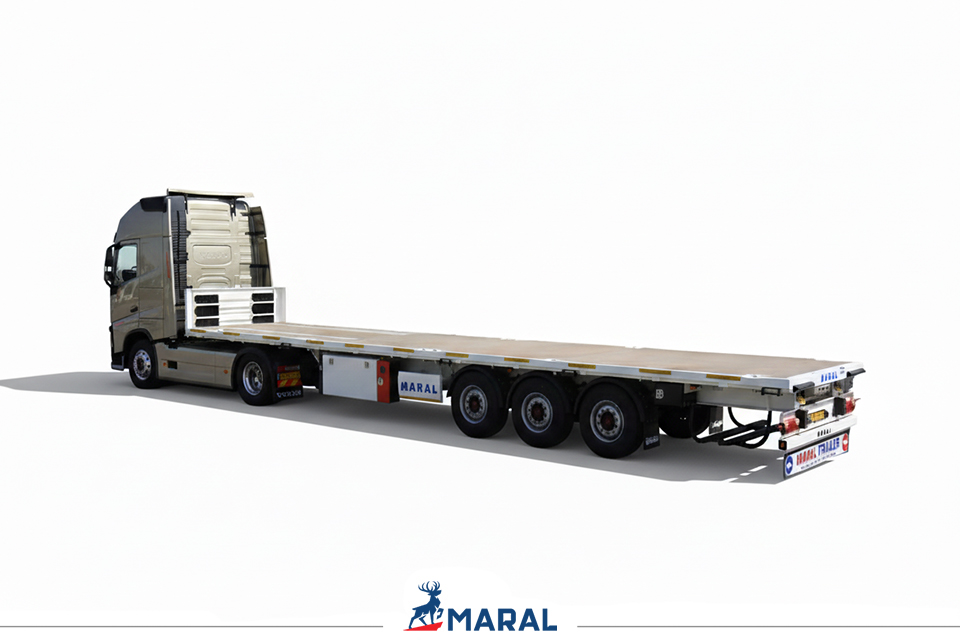
Design and Structure
The flatbed is defined by its straightforward, single, continuous platform that extends from the gooseneck to the rear bumper. This structure is built on a robust frame designed to support concentrated weight across its surface.
- Platform Uniformity: The deck maintains a uniform height, typically sitting 4 to 5 feet (1.2 to 1.5 meters) off the ground. This consistency simplifies the securing process for standard-sized cargo.
- Dimensions: Standard flatbeds are generally 48 feet in length, though 53-foot models are common in some regions, and they are typically 8.5 feet (2.6 meters) wide.
Loading and Logistics
The flatbed's greatest logistical advantage is its complete accessibility.
- Loading Flexibility: Cargo can be loaded from any angle (sides, top, or rear). This is essential when dealing with construction sites where space is limited, or when cargo needs to be loaded sequentially with a crane or overhead hoist.
- Equipment Required: Due to the deck's high position, self-propelled machinery cannot simply be driven on. Loading heavy machinery onto a flatbed requires cranes, specialized long ramps (often requiring external support), or access to a raised loading dock.
- Cargo Securing: Since there are no side walls, all loads must be secured using specialized equipment. Flatbeds are equipped with rub rails and stake pockets along the edges, allowing for flexible use of chains, straps, binders, and securements tailored to the load type.
Ideal Applications
The flatbed is the best choice when the primary concern is loading flexibility and the cargo is within legal height limits.
- Construction Materials: Steel coils, rebar, structural components, pre-cast concrete sections, and lumber.
- General Freight: Palletized goods that are too wide or oddly shaped for a standard box van.
- Smaller Machinery: Forklifts, skid steers, mini-excavators, or compact utility tractors where their total height does not exceed 8.5 feet when loaded.
- Flexibility: It is the go-to solution for logistics companies that need a versatile trailer capable of handling diverse daily freight requirements without specializing in extreme over-dimensional loads.
The Lowboy (Lowbed) Trailer: The Specialized Heavy-Haul Solution
The Lowboy Trailer—also commonly referred to as a Lowbed or Double-Drop Trailer—is a specialized piece of engineering designed specifically for transporting oversized, overweight, and over-height cargo that standard trailers simply cannot handle. It is the workhorse of heavy civil construction, mining, and energy sectors.

Specialized Structural Design
The core defining feature of the lowboy is its double-drop design, which is engineered for a single purpose: lowering the load's center of gravity and overall transport height.
- The Gooseneck: The front section connects to the truck's fifth wheel and is often removable (RGN), as detailed below.
- The Main Well (Deck): This is the crucial central part that sits significantly lower than the axles and the gooseneck. It is typically positioned only 18 to 24 inches (0.45 to 0.6 meters) above the ground.
- The Rear Bridge: The deck rises again over the rear axles.
- Benefit of Low Height: This sunken design allows the tallest part of the machinery—such as the cab of an excavator or the boom of a crane—to sit deep within the trailer's frame, ensuring the total transport height remains below the crucial legal limit (typically 13.5 to 14 feet) for safely passing under bridges and utility lines.
Massive Weight and Stability (Safety Focus)
Lowboy trailers are built not just low, but exceptionally tough to handle extreme forces.
- Superior Load Capacity: Lowboys are structurally reinforced and often use multiple axle configurations (2-axle, 3-axle, or multi-line setups) to distribute massive weight. They can handle a payload of 80,000 lbs (36,000 kg) or more, far exceeding the flatbed's standard capacity.
- Enhanced Stability: By sinking the cargo into the "well," the lowboy achieves an extremely low center of gravity (CG). This is a critical safety feature when hauling massive, top-heavy equipment. A low CG minimizes sway and roll, providing superior stability during cornering and braking, which is essential for safe heavy hauling over long distances.
Efficient Loading: The RGN Revolution
The most significant operational advantage of modern lowboys is their innovative loading mechanism, often achieved through a Removable Gooseneck (RGN).
- Drive-On Capability: When detached, the front of the lowboy's main deck drops right down to the ground. This creates a safe, shallow ramp that allows self-propelled heavy machinery—like bulldozers, wheel loaders, pavers, and large forklifts—to be driven directly onto the trailer with ease.
- Operational Efficiency: The drive-on, drive-off method drastically reduces the time and cost associated with transportation. It eliminates the need to hire and set up large, expensive cranes at both the loading and unloading sites.
When to Choose a Lowboy
The lowboy is your non-negotiable solution for:
- Over-Height Equipment: Any machine (like a large excavator, crane, or combine harvester) whose height, when placed on a standard flatbed, would violate road regulations.
- Overweight Loads: Machinery or components requiring the extra axles and reinforced structure of a specialized trailer (e.g., modular buildings, large industrial transformers, or rail cars).
- Self-Propelled Machinery: When easy, efficient, and safe drive-on loading is required for heavy construction equipment.

Key Differences: Flatbed vs. Lowboy Trailers
The distinction between these two semi-trailers primarily lies in their structure, which dictates the type of cargo they can legally and safely transport.
|
Feature |
Flatbed Trailer |
Lowboy/Lowbed Trailer |
|
Deck Height |
High (Approx. 4-5 feet / 1.2-1.5 meters from the ground) |
Low (Main deck/well is approx. 1.5-2.5 feet / 0.45-0.75 meters from the ground) |
|
Structure |
Single, entirely flat deck. |
Double-Drop design with a low 'well' in the middle, sitting between the gooseneck and the rear axles. |
|
Max. Freight Height |
Limited (Typically up to 8.5 feet / 2.6 meters) |
High (Typically up to 11.5 - 12 feet / 3.5 - 3.7 meters) |
|
Loading |
From the sides, top, or rear (requires a crane or forklift). |
Primarily from the front via a Removable Gooseneck (RGN) or ramps at the rear. |
|
Stability |
Standard stability. |
Superior Stability due to the extremely low center of gravity. |
Conclusion: The Right Tool for the Heavy Haul
The decision between a Flatbed Trailer and a Lowboy Trailer is not about which trailer is "better," but which is the right tool for your specific heavy equipment transportation job.
To summarize the definitive factors:
Choose the Flatbed when your primary need is versatility for general, non-stackable, or mid-sized freight where the load height is safely below 8.5 feet (2.6 meters), and flexibility in side-loading with a crane is essential.
Choose the Lowboy (Lowbed) when you are facing over-height challenges (loads exceeding 8.5 feet) or massive weight requirements. The low deck ensures legal compliance by keeping the overall transport height low,
In the demanding world of logistics, safety and legal compliance are paramount. Investing time to accurately assess your cargo's height, weight, and loading requirements ensures that your equipment arrives safely, efficiently, and without the expense of unexpected fines or delays.
Ready to Secure Your Heavy Equipment Transportation?
Whether your project requires the versatility of a Flatbed Semi-Trailer or the specialized capacity of a high-performance Lowboy Trailer, partnering with an experienced manufacturer is key.
Contact Maral Sanat Javid today for expert consultation on selecting the ideal heavy-duty trailer tailored to your fleet's specific needs, ensuring superior engineering and reliable performance for your most challenging hauls.
Faq
Top Articles
Modern Technologies Revolutionizing Trailer Axle Manufacturing
Modern trailer performance relies on advanced axles. We explore innovations in axle production that enhance fuel economy, reduce maintenance, and ensure superior road safety.
Brake Battle: Disc vs. Drum
Compare Disc Brakes vs Drum Brakes for heavy-duty vehicles. Understand pros, cons, and impact on performance, safety.
Your Ultimate Guide to Trailer Axle Types and Technical Specs
Trailer axles are the unsung heroes of heavy-duty transportation, directly impacting safety, load capacity, and operational efficiency. Choosing the wrong axle type can lead to costly downtime and compromised performance.