


Your Ultimate Guide to Trailer Axle Types and Technical Specs
Trailer axles are the unsung heroes of heavy-duty transportation, directly impacting safety, load capacity, and operational efficiency. Choosing the wrong axle type can lead to costly downtime and compromised performance.
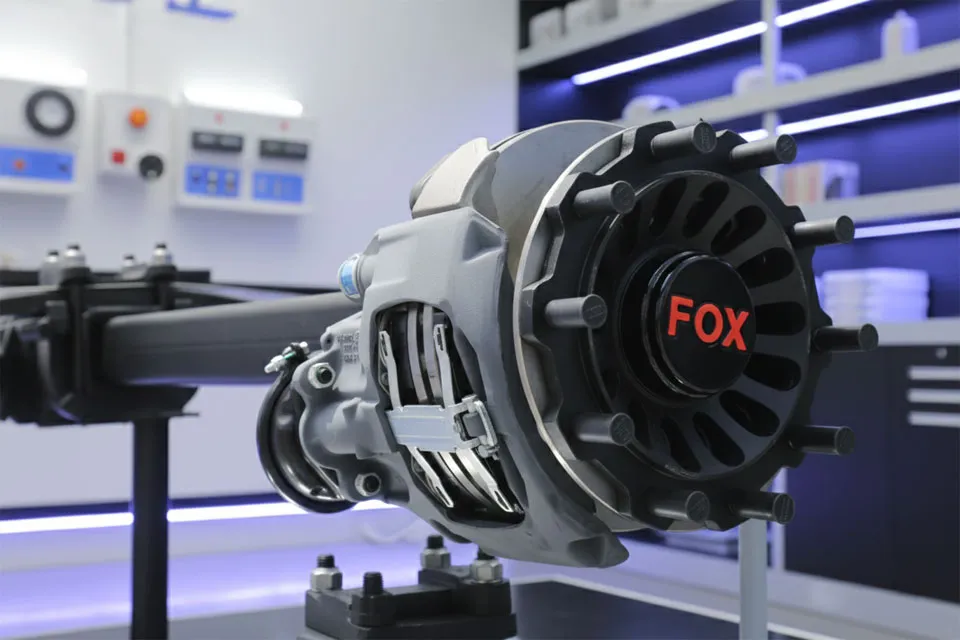
Mastering the Road: Your Ultimate Guide to Trailer Axle Types and Technical Specs
The global logistics and heavy haulage industry relies on efficiency, durability, and safety. At the heart of a trailer’s performance lies its axle system. More than just a connecting component, the axle determines the trailer's capacity, ride quality, braking performance, and overall lifespan. For professionals seeking to optimize their fleet's operation, a thorough understanding of the primary axle types and their intricate technical specifications is non-negotiable.
This comprehensive guide from Maral Sanat Javid delves into the engineering behind mechanical spring axles, the comfort of air suspension systems, and the strategic advantages of specialized liftable and steering axles. We will equip you with the knowledge to make informed decisions that translate into reduced operational costs and enhanced road reliability.
The Foundation: Understanding Axle Basics
Before comparing specific types, it's crucial to grasp the fundamental technical parameters common to all trailer axles:
- Load Rating (Capacity): Measured in kilograms (kg) or pounds (lbs), this is the maximum weight the axle is designed to safely carry. This is the single most important specification.
- Track Width (Axle Length): The distance between the center lines of the tire treads on the same axle. It is vital for ensuring stability and correct wheel alignment.
- Brake System Type: The mechanism used for stopping the wheel. Common types include drum brakes (robust and cost-effective) and disc brakes (superior heat dissipation and stopping power).
- Suspension Type: While the axle is the beam, the suspension system (springs, air bags, torsion arms) is what connects it to the trailer frame and absorbs road shock.
- Camber and Toe: Precise angles measured in degrees or minutes that ensure even tire wear and stability.

The Workhorse – Mechanical Spring Suspension Axles
The mechanical or leaf spring axle is the oldest and most trusted technology, known for its robustness, simplicity, and low maintenance.
Technical Characteristics
- Design: Utilizes layers of curved steel plates (leaf springs) stacked on top of each other. The load rests on the spring assembly, which flexes to absorb impacts.
- Durability: Exceptional resistance to severe conditions and heavy point loads. They have fewer complex parts, minimizing potential failure points.
- Maintenance: Low. Primarily involves checking U-bolts, shackle pins, and equalizers for wear. Replacement of a leaf pack is straightforward.
- Load Rating Range: Typically designed for heavy loads, ranging from 10,000 kg to over 18,000 kg for tandem or tri-axle configurations.
- Downside: Provides a harsher ride quality compared to air systems, which can impact fragile cargo and increase stress on the trailer structure over time.
The Smoothest Ride – Air Suspension Axles
Air suspension systems represent a significant leap in comfort and cargo protection, dominating the high-value freight and sensitive equipment transport sectors.
Technical Characteristics
- Design: Replaces mechanical springs with flexible air bags (bellows) connected to an on-board air compressor system. The air pressure in the bags supports the load.
- Ride Quality: Superior. The air bags continuously adjust pressure to maintain a constant ride height regardless of load, offering excellent vibration damping.
- Load Balancing: Highly effective. In multi-axle trailers, the air system automatically balances the load across all axles, preventing overload on any single point.
- Lift and Lower Function: Air suspension systems allow the operator to momentarily raise or lower the trailer frame (dock-leveling feature), simplifying loading/unloading and coupling/uncoupling.
- Complexity: Higher. Involves air lines, valves, height control sensors, and pressure regulators. Requires dedicated air system maintenance.
- Application: Ideal for bulk liquids, electronics, refrigerated goods, and other sensitive materials.
Specialized Solutions – Liftable and Steering Axles
These axles are designed not primarily for carrying static load but for enhancing operational flexibility, tire life, and fuel economy under specific conditions.
The Liftable (Pusher/Tag) Axle
- Function: Allows the operator to raise a non-essential axle off the ground when the trailer is empty or lightly loaded. This is typically achieved using an air bag mechanism.
- Benefits: Reduced Tire Wear: By lifting the axle, unnecessary tire friction is eliminated. Lower Fuel Consumption: Less rolling resistance saves fuel. Compliance: Allows the trailer to comply with bridge formula weight restrictions by varying the number of axles in contact with the road.
- Technical Requirement: Requires an advanced Electronic Braking System (EBS) or dedicated pneumatics to control the lifting and lowering action based on pre-set load thresholds.
The Self-Steering and Forced-Steering Axle
- Function: Designed for long trailers or those operating in confined spaces. The wheels of a steering axle can pivot to track the curve of the turn.
- Self-Steering: Uses mechanical forces (caster/camber geometry and pivot resistance) to turn the wheel automatically when the trailer turns.
- Forced-Steering: Utilizes hydraulic or electronic systems, connected to the tractor’s steering input, to force the trailer wheels to turn, offering precise control.
- Benefit: Reduced Tire Scrubbing: Eliminates the dragging motion during tight turns, drastically increasing tire life. Improved Maneuverability: Essential for navigating city streets, docks, and construction sites.

Comparing Critical Technical Specifications
For fleet planning, the choice boils down to a comparative analysis of the technical trade-offs:
|
Technical Aspect |
Mechanical Spring Axle |
Air Suspension Axle |
|
Initial Cost |
Lower |
Higher |
|
Ride Quality |
Fair (Harsh on Bumps) |
Excellent (Smooth & Stable) |
|
Load Distribution |
Fixed (Varies with spring condition) |
Dynamic (Automatically balanced) |
|
Maintenance Profile |
Low (Simple components) |
Moderate (Involves pneumatics & electronics) |
|
Axle Type Suitability |
High-load bulk goods, construction, gravel |
Refrigerated transport, sensitive freight, tankers |
|
Adjustability |
None |
Full (Leveling, Lifting, Lowering) |
Material Science and Axle Construction
The material used in the axle beam construction directly affects its strength and weight—two factors critical for payload maximization and structural integrity.
- High-Strength Steel: The standard material. Offers excellent tensile strength and fatigue resistance, providing a durable, cost-effective solution.
- Lightweight Solutions: Advanced alloys and heat treatments are increasingly used to reduce the unsprung weight of the axle (the weight not supported by the suspension). A lighter axle allows for a higher payload without exceeding legal Gross Vehicle Weight (GVW) limits.
- Precision Manufacturing: Modern axles, especially those used by Maral Sanat Javid, are constructed using precision robotic welding and stress-tested components to ensure uniformity and prevent premature failure due to fatigue cracking.
The Role of Braking Systems
The axle is the mounting point for the brakes, and the choice between drum and disc brakes is a major technical consideration:
- Drum Brakes: Traditional and reliable. They are less sensitive to dust and moisture, making them suitable for rugged environments. They are generally simpler to maintain but can experience brake fade (loss of stopping power due to excessive heat) under prolonged heavy use.
- Disc Brakes: Offer superior thermal management and significantly better stopping power. They dissipate heat faster and provide more consistent performance, which is vital for trailers carrying high-inertia loads. While initial cost is higher, their reduced maintenance frequency often balances the lifecycle cost.

Conclusion: Aligning Axle Technology with Operational Goals
The axle comparison ultimately guides the trailer specification process. For maximum payload on fixed routes in stable environments, the reliability of the mechanical spring axle remains a compelling choice. However, for operations demanding cargo protection, fuel efficiency, and route flexibility, the sophistication of air suspension and specialized liftable/steering axles offers a clear operational advantage.
Maral Sanat Javid is committed to providing axle and suspension systems engineered for the highest standards of safety and performance. Our technical team works closely with fleet operators to select and customize axle configurations that perfectly match their load profiles, route conditions, and regulatory requirements. Investing in the right axle technology is not merely a purchase; it is a strategic decision that guarantees the efficiency and longevity of your entire fleet.
Ready to optimize your fleet with superior axle technology?
Contact the Maral Sanat Javid technical sales team today for a consultation on selecting the perfect, load-rated axle system that maximizes your efficiency and safety.
Faq
Top Articles
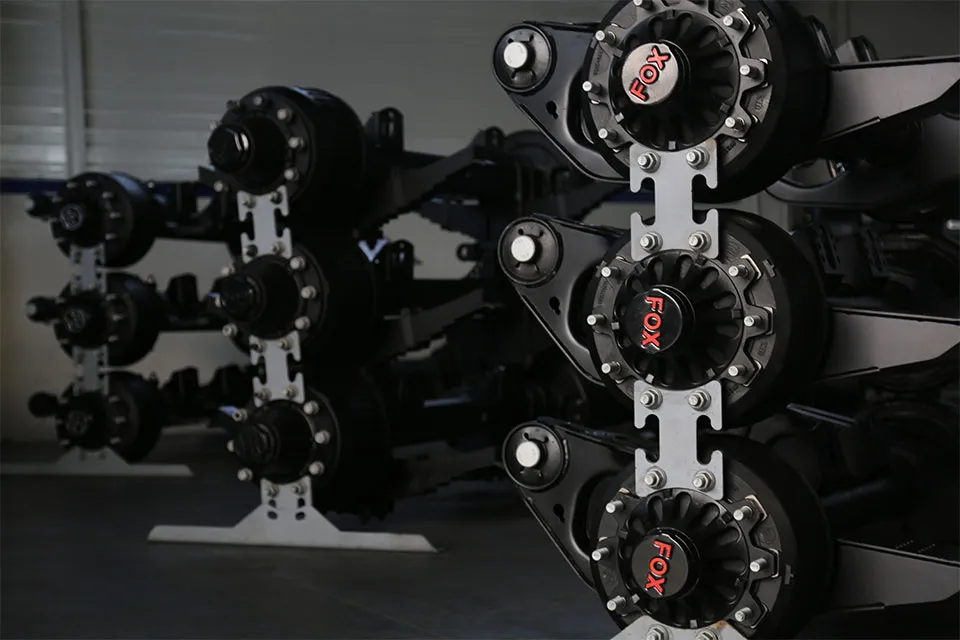
Modern Technologies Revolutionizing Trailer Axle Manufacturing
Modern trailer performance relies on advanced axles. We explore innovations in axle production that enhance fuel economy, reduce maintenance, and ensure superior road safety.
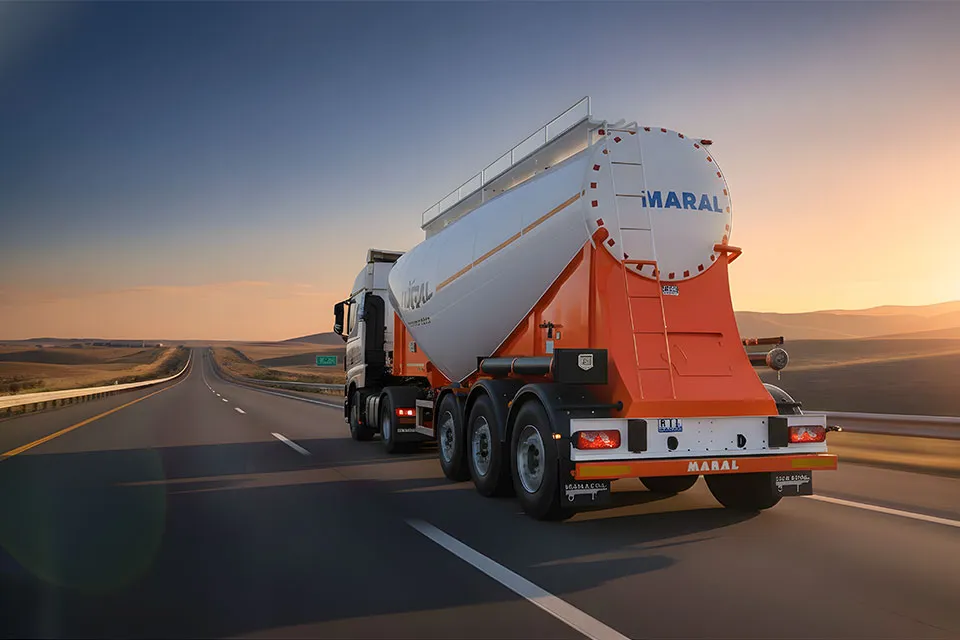
Brake Battle: Disc vs. Drum
Compare Disc Brakes vs Drum Brakes for heavy-duty vehicles. Understand pros, cons, and impact on performance, safety.
Your Ultimate Guide to Trailer Axle Types and Technical Specs
Trailer axles are the unsung heroes of heavy-duty transportation, directly impacting safety, load capacity, and operational efficiency. Choosing the wrong axle type can lead to costly downtime and compromised performance.