


The Ultimate Guide to Trailer Brake & Suspension Safety Standards
The safety of your fleet, cargo, and drivers hinges on two critical systems: brakes and suspension. In the world of heavy haulage, ignoring international and regional safety mandates is not an option—it’s a liability.

Why Safety Standards Matter: The Foundation of Roadworthiness
In commercial road transport, performance is useless without safety. Adherence to strict trailer safety regulations is the primary factor in preventing accidents, reducing maintenance costs, and ensuring international compliance (like ECE and DOT).
The braking and suspension systems are the dynamic duo responsible for control, stability, and stopping power, especially under heavy loads.
Critical Brake System Safety Standards: Stopping Power and Control
The braking system is arguably the most vital safety component on any heavy-duty trailer. Its design and performance are strictly regulated by international standards (such as ECE Regulation R13 and regional standards like FMVSS), focusing on reliability, rapid response, and stability under load.
A. The Mandate for Advanced Systems (ABS & EBS)
Modern transport demands more than simple air pressure; it requires intelligent electronic control for maximum safety.
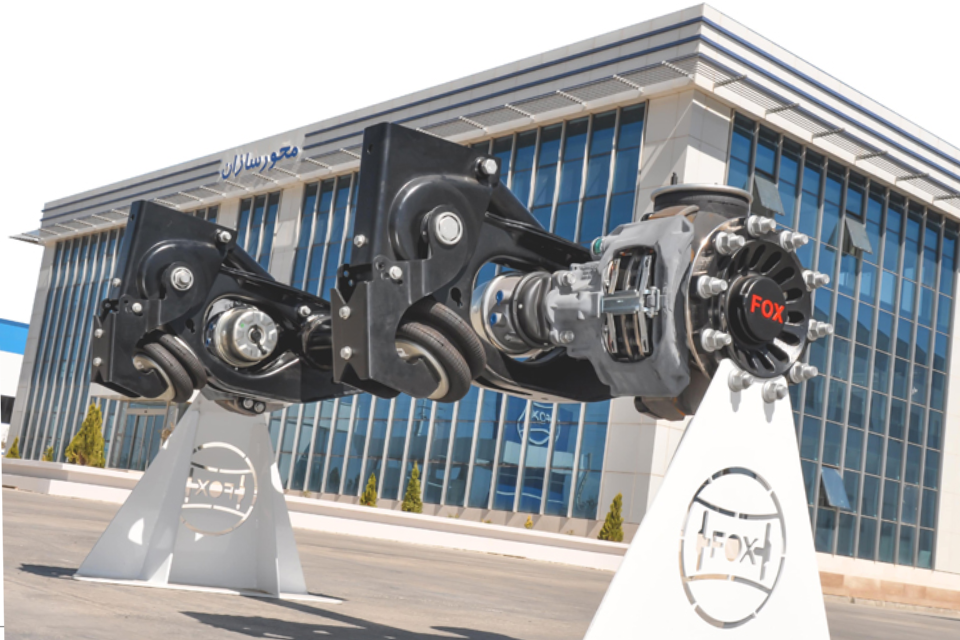
1. Anti-lock Braking System (ABS): The Safety Foundation
- Function: ABS monitors the rotational speed of each wheel during braking. If a wheel starts to lock up (skid), ABS momentarily releases and reapplies the brake pressure to that specific wheel.
- Benefit: This action allows the driver to maintain steering control and prevents the trailer from jackknifing, especially during emergency stops or when driving on low-friction surfaces like wet or icy roads. ABS is the bedrock of trailer stability.
2. Electronic Braking System (EBS): The Gold Standard in Performance
- Function: EBS is an evolution of ABS. It introduces an electronic signal path alongside the conventional pneumatic (air) line. When the driver presses the brake pedal, the electronic signal travels instantly to the brake valves on the trailer axles.
- Benefit: This electronic communication drastically reduces response time, often cutting it by half compared to pure pneumatic systems. EBS also manages brake force distribution (BFD), ensuring the trailer's braking effort is precisely matched to the load on each axle, optimizing the stopping distance and minimizing uneven wear.
- Key Requirement: Due to their superior stopping performance and load management capabilities, EBS systems are a mandatory requirement for new commercial vehicles and heavy-duty trailers in many major global markets.
To fully grasp the critical dimensions of these safety regulations, and to see how Maral Sanat Javid adheres to the most stringent international manufacturing protocols, take the next step in securing your fleet's future.
[DOWNLOAD THE GLOBAL TRAILER MANUFACTURING STANDARDS GUIDE TODAY]
B. Maintenance and Inspection Standards: Guaranteeing Roadworthiness
Adherence to safety standards is a continuous process defined by rigorous inspection and maintenance protocols. Failure in these checks can result in immediate prohibition from travel.
1. Brake Pad/Lining Thickness (The Wear Check)
- Standard: Brake pads or linings must not fall below the manufacturer's specified minimum thickness.
- Action: Regular measurement during scheduled inspections is required. Insufficient thickness compromises the total available braking force and can lead to overheating and catastrophic failure.
2. Air Line Integrity (The Seal Check)
- Standard: The entire air supply system must be leak-free and robust.
- Action: Inspectors check air tanks, valves, and, critically, the flexible air lines and couplings (glad hands) for cracks, wear, chafing, or leaks. A significant air leak directly impairs brake operation and is a major safety violation.
3. Brake Chambers and Slack Adjusters (The Adjustment Check)
- Standard: Automatic slack adjusters must maintain the correct pushrod stroke length to ensure immediate brake application.
- Action: Technicians measure the brake stroke. Excessive stroke indicates a problem with the slack adjuster or worn components, resulting in a delayed, weak, or uneven brake application. Correct adjustment is fundamental to achieving the required brake timing.
4. Roller Brake Testing (The Performance Check)
- Standard: This is a periodic, mandatory test where the trailer wheels are run on specialized rollers to simulate braking.
- Action: The test measures the total brake force generated by each wheel and axle. The results are compared against the legal minimum required braking efficiency percentage (typically around 50-65% depending on the region and load classification). This provides a measurable, quantitative assessment of overall brake performance.
Suspension Safety Standards for Heavy Haulage: Load Management and Stability
The trailer suspension system acts as the crucial link between the chassis and the axles, managing dynamic forces, distributing weight, and ensuring the tires maintain optimal contact with the road. High-quality air suspension systems are paramount for safe, controlled, and efficient transport, especially when hauling sensitive or high-value cargo.
A. Axle and Load Distribution Compliance
Safety standards related to suspension are deeply intertwined with legal load limits and the structural integrity of the trailer under extreme conditions.

1. Gross Axle Weight Rating (GAWR) and Load Rating
- Standard: Every component—from the air bags and axle beams to the chassis mounts—must be rated to safely accommodate the maximum allowable weight for that axle configuration (GAWR) and the Kingpin Load. Overloading is a critical safety violation that strains every part of the suspension and braking system.
- Maral Sanat Javid Commitment: By utilizing premium-grade axles and high-capacity air springs (often sourced from global leaders like FOX or top European brands), our trailers ensure a significant safety margin beyond legal weight limits.
2. Automatic Height Control Valves (HCVs): Maintaining Levelness
Standard: Modern air suspension systems must utilize Height Control Valves (HCVs). These valves automatically adjust the air pressure in the air bags.
Function: They are essential for two reasons:
- Consistent Ride Height: They maintain a predetermined, constant trailer floor height regardless of whether the trailer is empty or fully loaded.
- Safe Coupling: They ensure the Kingpin height remains accurate for safe coupling and decoupling with the tractor unit.
- Critical Safety Impact: A non-functional or slow HCV can lead to an uneven, tilted trailer, severely compromising stability and increasing the risk of rollover on curves.
3. Precision Axle Alignment
- Standard: Axle alignment must be calibrated with exceptional precision (measured in fractions of a millimeter).
- Benefit: Proper alignment guarantees that all axles track perfectly straight behind the tractor unit. Misalignment causes a "crabbing" effect, which strains the suspension components and is the leading cause of premature, uneven tire wear, resulting in higher operational costs and a significant safety risk (blowouts).
B. Component Integrity and Preventive Maintenance
The lifespan and reliability of the suspension depend entirely on the integrity of its physical components, which must withstand continuous vibration, shock, and heavy dynamic loads.
1. Air Springs (Air Bags): The Shock Absorbers of the System
- Inspection Focus: Technicians must rigorously check the rubber material for cracks, abrasions, or weathering. They also inspect the mounting hardware and the internal bellows for slow leaks.
- Safety Implication: A burst or severely leaking air bag can cause an immediate drop on that corner of the trailer, leading to a sudden, dangerous load shift and loss of control.
2. Shock Absorbers (Dampers): Controlling Oscillation
- Function: While air springs carry the load, shock absorbers control the spring action. They dampen vertical oscillations and prevent the trailer from bouncing excessively after hitting bumps.
- Inspection: Checks involve looking for fluid leaks, testing mounting security, and assessing damping force.
- Safety Implication: Worn-out or failed shocks allow the wheels to momentarily leave the road surface, compromising the effectiveness of both the braking (EBS/ABS) and steering systems, especially during high-speed maneuvers.
3. Leaf Springs, Hangers, and U-Bolts (For Mechanical Systems)
- Inspection: For trailers utilizing mechanical suspension, the leaf springs are checked for fractures or cracks, particularly near the eyes. Crucially, the U-bolts that clamp the spring pack to the axle must be torqued to the manufacturer's specification.
- Safety Implication: A loose U-bolt allows the axle to shift, instantly creating severe misalignment and potentially causing the axle to separate entirely under extreme stress.

Maral Sanat Javid: Engineering for Global Safety
As a premier manufacturer of high-quality trailers, Maral Sanat Javid integrates these safety standards into the core of every design. We utilize internationally certified components, such as Wabco/Knorr-Bremse EBS systems and robust FOX/JOST axles and suspensions, ensuring:
- Guaranteed Stopping Power: Optimized EBS/ABS performance for the shortest, safest stopping distances, even with maximum payload.
- Structural Durability: Use of high-grade steel and adherence to quality standards like ISO 3834 for welding ensures the chassis and suspension can handle the load.
- Regulatory Compliance: Every trailer meets the necessary regional and international road safety regulations, guaranteeing a smooth, legal, and safe operation globally.
Faq
Top Articles
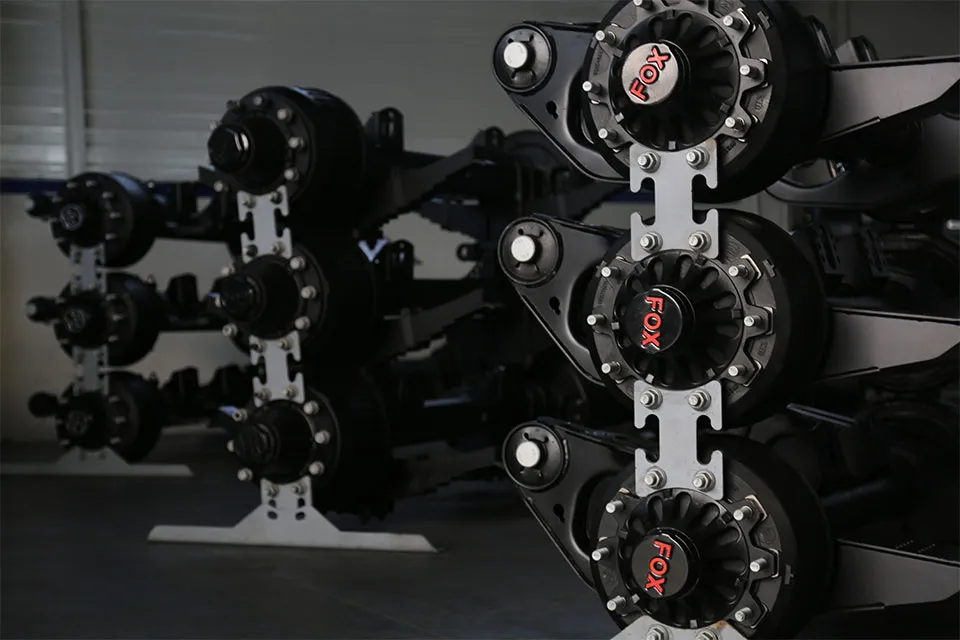
Modern Technologies Revolutionizing Trailer Axle Manufacturing
Modern trailer performance relies on advanced axles. We explore innovations in axle production that enhance fuel economy, reduce maintenance, and ensure superior road safety.
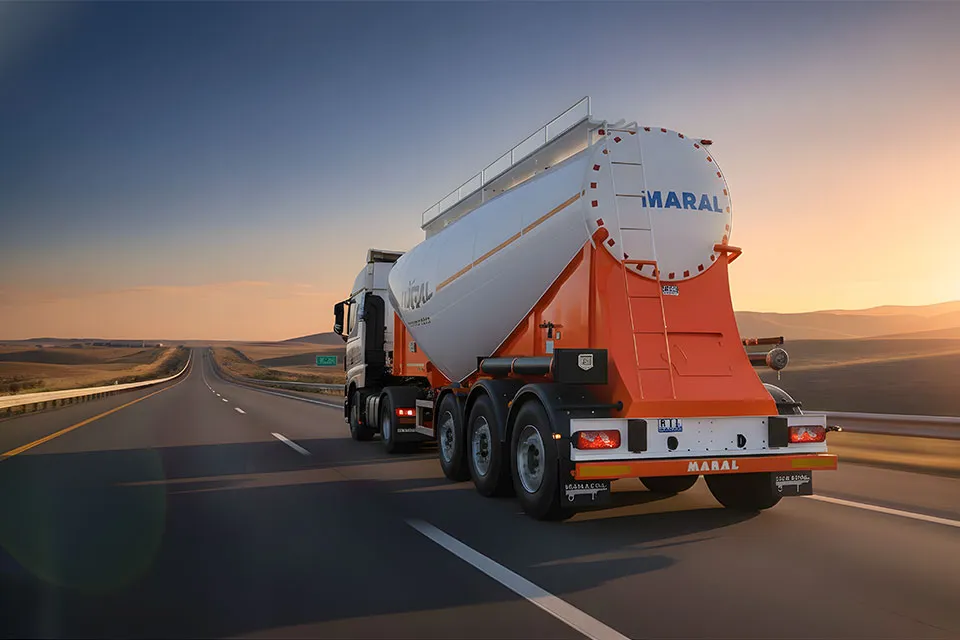
Brake Battle: Disc vs. Drum
Compare Disc Brakes vs Drum Brakes for heavy-duty vehicles. Understand pros, cons, and impact on performance, safety.
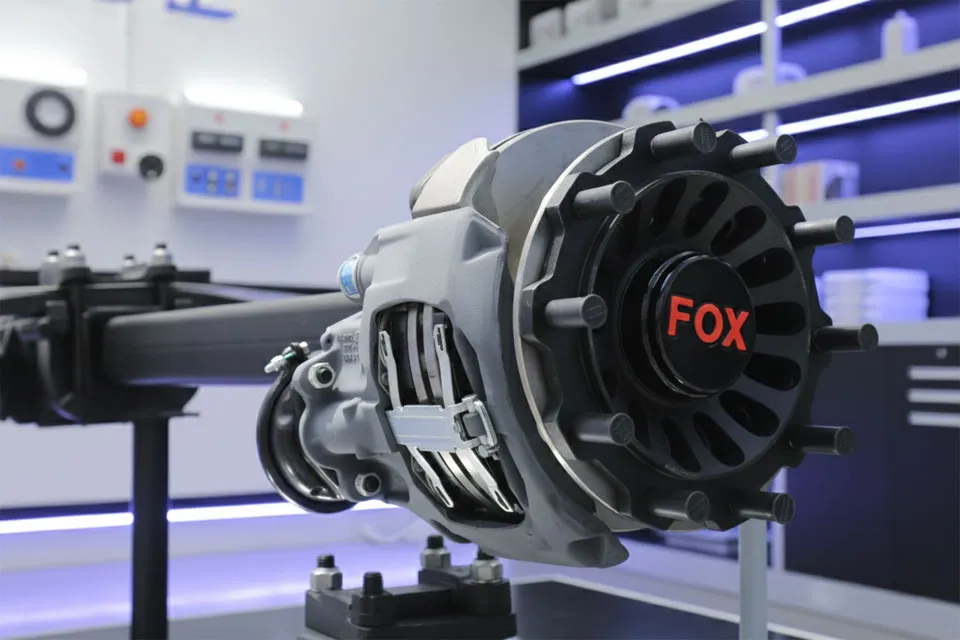
Your Ultimate Guide to Trailer Axle Types and Technical Specs
Trailer axles are the unsung heroes of heavy-duty transportation, directly impacting safety, load capacity, and operational efficiency. Choosing the wrong axle type can lead to costly downtime and compromised performance.